Wallet Types.
Wallet Types
There are several types of cryptocurrency wallets, each coming with own pack of advantages and disadvantages. They differ in terms of security layers provided, as well as how easy they are to manipulate.
Online Wallets: These are the most numerous crypto storage platforms out there in the industry. They require simple registration, have very little protection layers, and are mostly free to use. Their main purpose is to provide fast liquidity and easy-to-handle interface for small trade investments. Many of these do not employ encryption on keys and are easily hacked. Many exchanges experienced crippling situations due to lax safety measures.
Desktop Wallets: Open-source desktop wallet programs come with much higher security than online storages, as they save your private keys in your computer, which is often encrypted using a password, and they are protected by your computer’s antivirus software. You can download one of the existing solutions or develop your own crypto wallet.
Take note that some of the platforms out there might take quite a bit of your hard disk space. You would be forced to download entire blocks, from the very beginning.
Mobile wallets: One of the newest wallet developments are certainly open-sourced mobile platforms. With the tip of your fingers, you can create your own storage space within the blockchain network. Additionally, with wallet apps, one can keep an eye on the balance easily enough. The software is usually available for both Android and iOS users. These are becoming quite popular in recent months, with many new exciting projects already planned out. Also, given the constrained software runtime environment, mobile wallets can be more secure than desktop wallets.
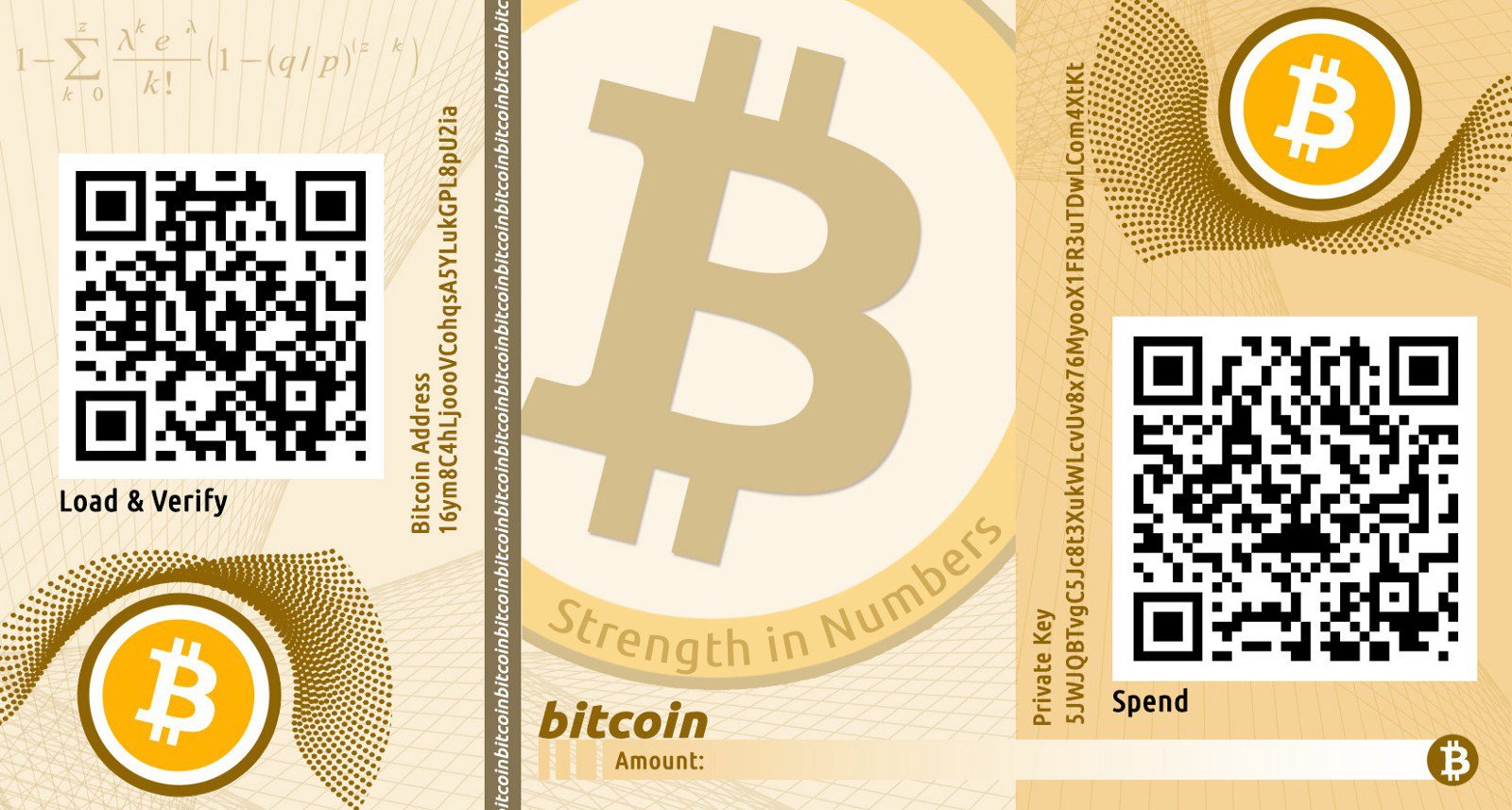
Paper Wallets: You can have an address code and a private key on a piece of paper, making up for a paper wallet like the following picture. The only downside is the paper itself, as you can lose it and thus lose your balance. They are also pretty cheap to make, as you need a printer, a piece of paper and a computer.
Print out the address and your private key, save it in a safe place and you are done. It is a fully functional wallet, as seen in the picture below.
Hardware Wallets: Probably the best wallets in terms of security are the so-called hardware wallets or HD wallets. These devices come with an abundance of security measures, including PIN codes, physical buttons for transfer confirmation, passphrases, passwords, and others. The con of this particular wallet is the high price ($50-$5000), whereas other wallets are mostly free.
However, the price tag really represents the quality of service, as companies often use materials that are hard to break. Keep an eye on shipping details, since not all HD wallets are globally available.
Famous Crypto Wallets
Now that you know the key features that crypto wallets should have, it is time to delve deeper into the market. In this section, we go over some of the most popular choices in the industry, in terms of user base, security, and cryptocurrencies supported.

good.
ReplyDeleteNICE ONE
ReplyDeleteGood information
ReplyDeletenice one
ReplyDelete
ReplyDeletegood information
good information about crypto wallet
ReplyDeletegood information about crypto wallet
ReplyDelete